
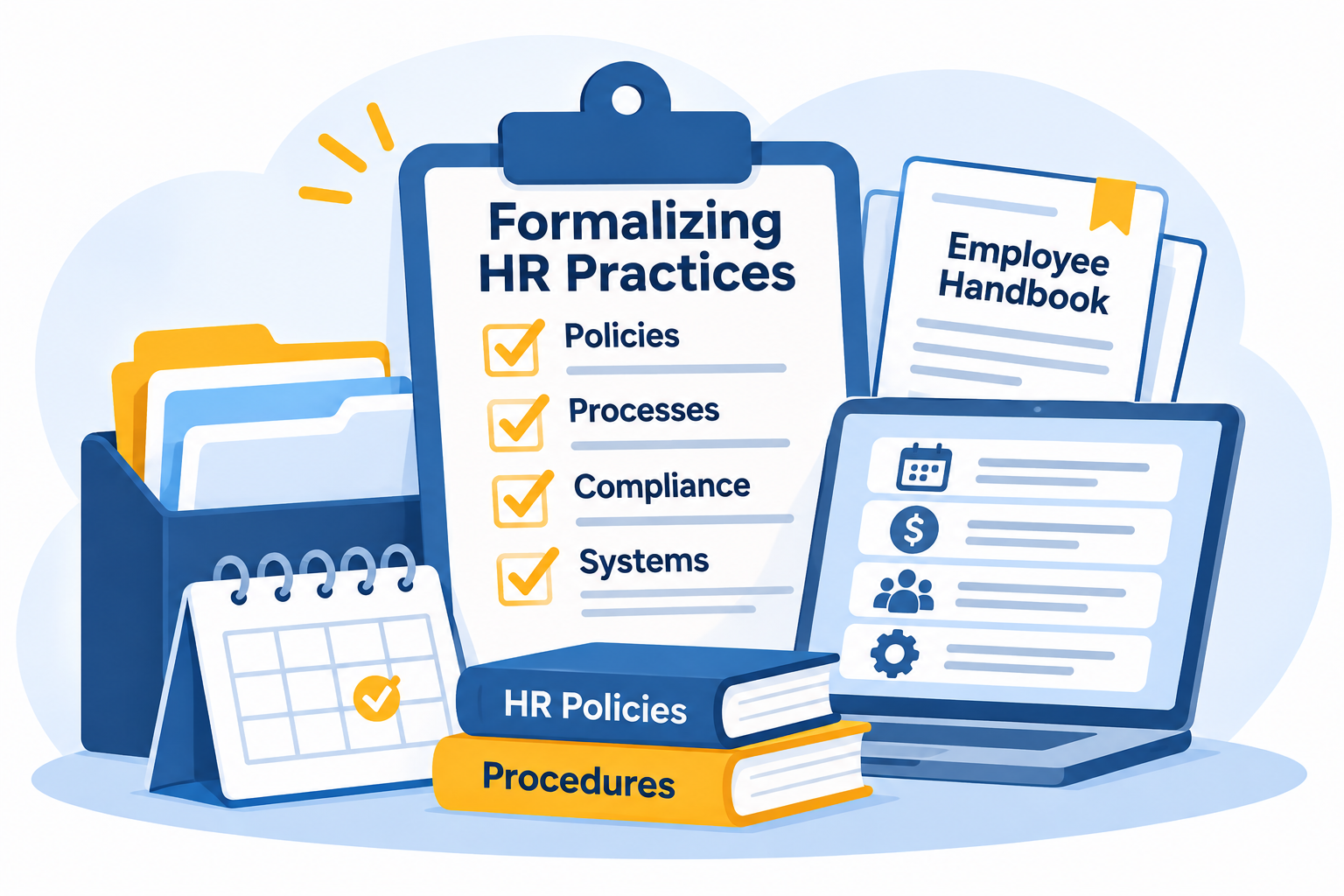
Recognizing when growing nonprofits need clearer policies, consistent practices, and stronger HR infrastructure.
Many nonprofits are built on trust. Time off gets approved with a quick conversation. Raises happen when the budget allows and the executive director thinks they're deserved. Problems get worked out face to face. There's no need for a policy when everyone already knows how things are done.
For a while, this works remarkably well. It keeps the organization flexible, personal, and focused on the mission rather than on paperwork.
Then, gradually, it doesn't. The same practices that once felt efficient start producing confusion, frustration, and risk. Recognizing when that shift has happened is one of the most important judgment calls a growing organization makes.
Why informal HR works at first
Informal practices succeed in early-stage organizations for good reasons. Teams are small, so leaders know each person well. Decisions are made by the same one or two people, which keeps them fairly consistent. Communication happens naturally. And there's real value in being able to adapt quickly without rules getting in the way.
The problem isn't informality itself. It's that informal systems depend on conditions that growth eventually changes.
Signs informal practices have stopped working
Decisions are inconsistent. Two employees in similar situations get different answers depending on who they ask or when.
Perceptions of favoritism grow. Even fair decisions look arbitrary when the reasoning isn't visible.
Questions have no clear answer. Staff ask about leave, remote work, or pay increases, and leaders have to figure it out on the spot.
Leaders spend too much time on HR. The executive director becomes the default resolver of every people issue.
Knowledge lives with individuals. When a key person is out or leaves, no one knows how certain things are handled.
Outside parties start asking. Funders, auditors, or insurers request policies or documentation that don't exist.
The risks of staying informal too long
When an organization outgrows its informal practices but keeps relying on them, the consequences tend to build quietly:
Legal exposure. Undocumented decisions about pay, discipline, or termination are hard to defend if they're challenged.
Unequal treatment. Without consistent standards, bias can creep in even when no one intends it.
Turnover. Employees who feel decisions are unpredictable or unfair are more likely to leave.
Funding risk. Funders increasingly look at organizational health and may expect basic HR policies and practices.
Leadership burnout. Leaders who carry every people decision personally have less time and energy for strategy and mission.
Formalizing without losing your culture
Many leaders resist formal HR because they worry it will make the organization rigid or impersonal. That concern is understandable, but formalizing doesn't have to mean adding bureaucracy.
The most effective approach starts with what's already working. Many informal practices reflect your organization's values, such as flexibility, trust, and care for employees. Documenting those practices makes them consistent and available to everyone, not just those who know whom to ask.
The aim is clarity, not control. Good policies explain what employees can expect and how decisions get made. They protect the culture you've built by making sure it applies fairly as the organization grows.
Start with an honest assessment
The first step isn't writing a stack of new policies. It's understanding where your organization stands today. An HR assessment typically reviews:
What exists. Current policies, handbook, job descriptions, and forms, along with when each was last updated
What actually happens. How practices like hiring, pay decisions, time off, and performance feedback work in day-to-day reality
Where the gaps are. Areas with no policy, outdated documents, or practices that vary across the organization
What carries risk. Compliance requirements your organization may not be meeting at its current size and location
What to tackle first. A prioritized plan that addresses the most important issues without overwhelming your team
This gives leadership a clear, objective picture and a practical roadmap, rather than a vague sense that "we should probably formalize things."
Find out where your organization stands
Outgrowing informal HR isn't a failure. It's a natural result of an organization that's growing and maturing. The key is recognizing the shift and responding on your own timeline, before a problem forces the issue.
E/E Business & Finance Solutions conducts HR assessments for nonprofits, reviewing current policies and practices, identifying gaps and risks, and delivering a prioritized plan to build the structure your organization needs while protecting the culture that makes it work.
If you suspect your informal practices are starting to show strain, let's talk about what an assessment could reveal. Schedule an HR assessment conversation with E/E.
