
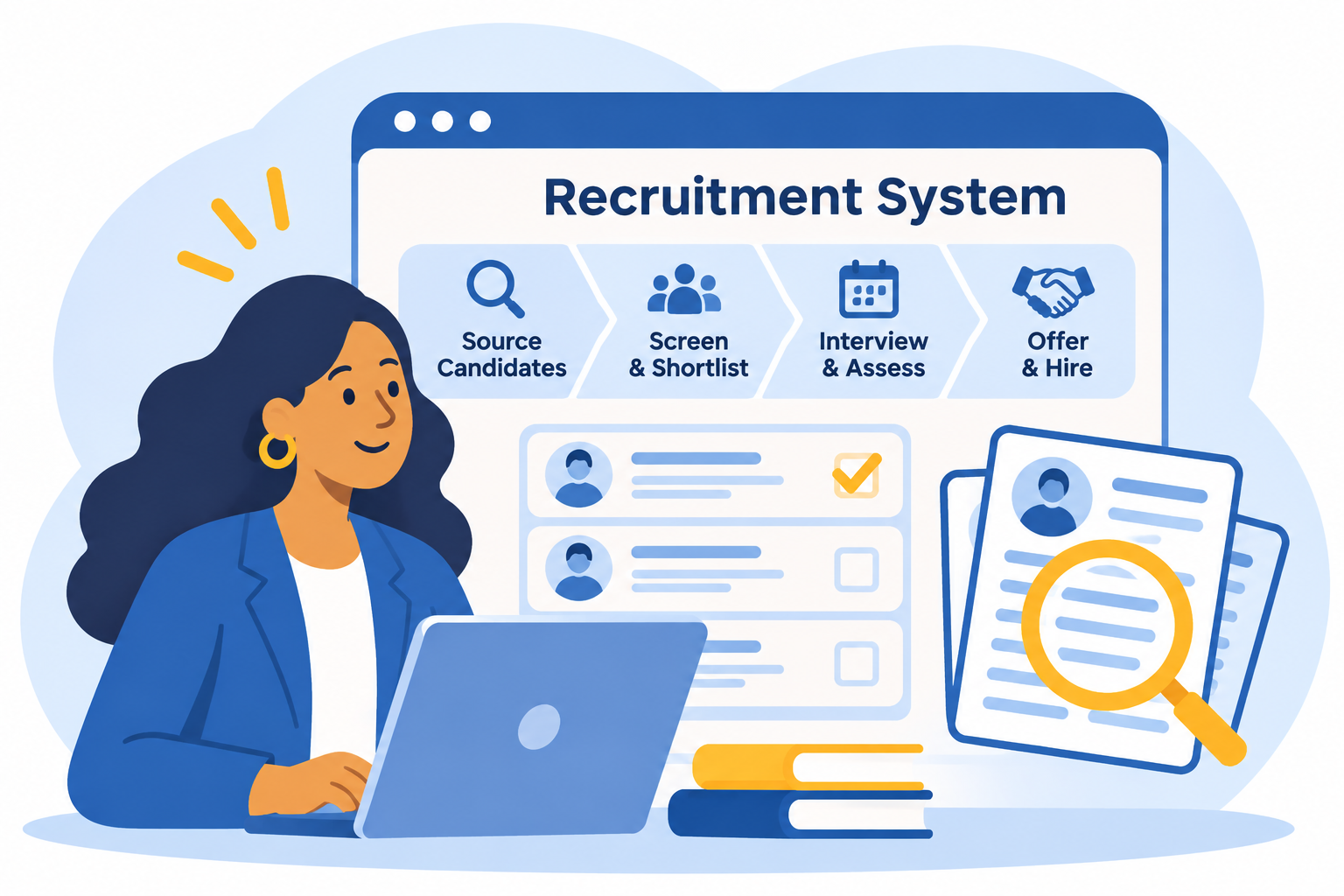
Before investing more in recruitment, examine whether unclear roles, lengthy decisions, inconsistent interviews, and weak onboarding are costing your nonprofit qualified candidates.
"We just can't find good people."
It's one of the most common frustrations among nonprofit leaders. And sometimes it's true: certain roles are hard to fill, salaries can't always compete, and some local labor markets are tight.
But often, the problem isn't a shortage of qualified candidates. It's what happens to those candidates once they enter your hiring process. Before investing more in job boards, recruiters, or outreach, it's worth asking whether your hiring system is quietly turning good people away.
Signs your hiring system is the problem
Postings stay open for months with few strong applicants
Promising candidates withdraw partway through the process
Interviews feel inconsistent from one candidate to the next
Hiring decisions drag on while the team debates or waits for approvals
Offers get declined, often because of pay or timing
New hires leave within their first few months
Each of these points to a specific breakdown, and most can be fixed.
Where hiring systems usually break
The role isn't clearly defined. If leadership hasn't agreed on what the position needs to accomplish, the posting will be vague and interviewers will evaluate candidates against different expectations.
The posting doesn't give candidates what they need. Missing pay ranges, long lists of requirements, and generic language discourage strong applicants, especially those who have other options.
The process is too slow. Every extra week between application and offer increases the chance a good candidate accepts somewhere else.
Interviews aren't structured. Without consistent questions and criteria, hiring decisions rely on impressions, which makes them less accurate and less fair.
No one owns the decision. When it's unclear who makes the final call, offers stall.
Communication drops off. Candidates who don't hear back assume the worst and move on.
Onboarding is an afterthought. Even a well-chosen hire can leave quickly if their first weeks are disorganized.
Fix the system before you spend more on recruitment
More applicants won't help if the process loses them. Strengthening the system usually comes down to a few practical steps:
Map your current process. Write down every step from the decision to hire through the new employee's first day, including who is involved and how long each step takes.
Define the role before you post. Agree on the position's purpose, key responsibilities, must-have qualifications, and pay range.
Write postings for candidates, not for files. Lead with the impact of the role, keep requirements focused on what truly matters, and include the pay range.
Structure your interviews. Use consistent questions tied to the role's responsibilities and a shared way to evaluate answers.
Set timelines and stick to them. Decide in advance how quickly candidates will move from one stage to the next, and who is responsible for keeping things moving.
Clarify decision authority. Name who makes the final hiring decision and who approves the offer.
Communicate at every stage. Let candidates know where they stand, including when they're no longer being considered.
Connect hiring to onboarding. Have a plan ready for the new employee's first 30, 60, and 90 days before they accept.
None of these steps requires a large budget. They require clarity and consistency, which is what turns hiring from a scramble into a repeatable process.
Measure what's really happening
You don't need sophisticated software to understand where your process breaks down. Tracking a few simple measures for each open position will tell you a lot:
Time to fill: how many days from posting to accepted offer
Drop-off points: the stage where most candidates withdraw or stop responding
Offer acceptance: how often candidates say yes, and why they say no
Early retention: how many new hires are still with you after 90 days
These numbers help you see whether you have a sourcing problem, a process problem, or a retention problem. Each one calls for a different solution.
Build a hiring system that works for you
When your hiring system is clear and consistent, good candidates are more likely to apply, stay in your process, accept your offers, and remain with your organization.
E/E Business & Finance Solutions helps nonprofits strengthen the infrastructure underneath recruitment, from role definition and job postings to structured interviews, decision processes, and onboarding plans.
If your positions stay open too long or new hires don't stay long enough, let's look at your hiring system together. Schedule a hiring system conversation with E/E.
